The Franco-Spanish equipment manufacturer Mondragon Assembly, in partnership with the CEA, is presenting innovative and unique equipment and processes for the photovoltaic industry. This comprehensive solution enables solar panel manufacturers to prefabricate the core component of a photovoltaic module for easier integration onto any type of mounting structure, making it suitable for a wide range of industrial applications. Mondragon Assembly presented this innovation at Intersolar (Munich, June 22–25, 2026).
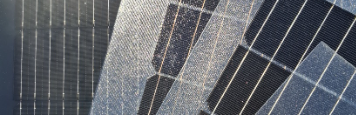
INNOVATION A unique industrial tool designed to give all industrial sectors access to solar-powered products.
Published on 07/03/2026
The electrification of consumer demand and the maturity of the photovoltaic industry are driving the desire to integrate this power source directly into equipment and structures. This naturally brings to mind electric mobility, buildings, and infrastructure. We want local, mobile, and autonomous solutions.
To achieve this and meet the requirements of each application, the CEA, through its ITE INES-Technologies division, is developing technologies to integrate photovoltaics into all relevant applications.
This integration requires the development of specific processes to vary the format, materials, weight, design, and electrical architecture, while taking the product’s life cycle analysis into account.
Photovoltaic modules are generally manufactured by laminating strings of solar cells in a flat laminator, using a production line designed for highly standardized modules.
To obtain integrated solutions—which are inherently specific—this process lacks flexibility: it must be possible to vary the size, shape, substrate materials, or aesthetic features, as well as assembly processes specific to the sector and application.
The idea is to implement a two-step manufacturing process. The first step involves ensuring a stable assembly of the solar cells using a pre-lamination technique, which facilitates the second step—a process that can be more easily carried out by another industrial partner using various techniques, such as conventional flat lamination or alternatives like 3D lamination, molding, or overmolding techniques. The pre-laminated modules become components used in other production lines.
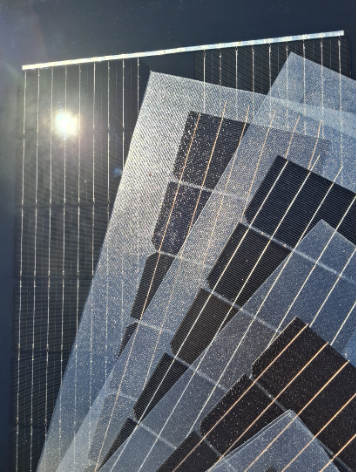
The “pre-laminator,” co-developed with equipment manufacturer Mondragon Assembly, produces pre-laminates up to 1.6 meters in length that are compatible with various types of silicon PV cells—and, with time, all types of cells.
The pre-laminates are encapsulated between thermoplastic or thermosetting polymers, potentially incorporating other materials to serve various additional functions (improved storage, logistical requirements, recycling, etc.).
The process is fast (20–30 mm/s, or one string per panel according to the current standard in less than a minute). The developed process enables the production of pre-laminates free of visual defects such as bubbles or cracks. A digital interface controls the various process setpoints (temperature, speed, and pressure).
The final modules exhibit excellent quality, verified by photoluminescence. The use of thermoplastic polymers allows the prelaminates to be reprocessed without adding additional materials—and thus without incurring extra costs. The physical characteristics are maintained over time, enabling the prelaminate to be reprocessed to produce a final product that complies with the standard.
This work was carried out as part of a project associated with the INES-Technologie ITE: the European SEAMLESS-PV project, which began in 2023 and is coordinated by Tecnalia.
The work carried out as part of the project includes the design of the machine, its fabrication by Mondragon Assembly, as well as the development of the two-step process, the selection of materials, and the production of 60 m² of panels to be integrated into the facade of the FACT experimental building located at INES in Le Bourget-du-Lac. For the CEA, this is therefore a comprehensive project involving a TRL ramp-up over four years—which is quite rapid!
 Credits: Philippe THONY, CEA