In a collaborative study, 3SUN and the CEA demonstrate that the mechanical behavior of framed photovoltaic modules—composed of glass and a back sheet—results from a complex interaction between the frame’s geometry and the mounting configuration.
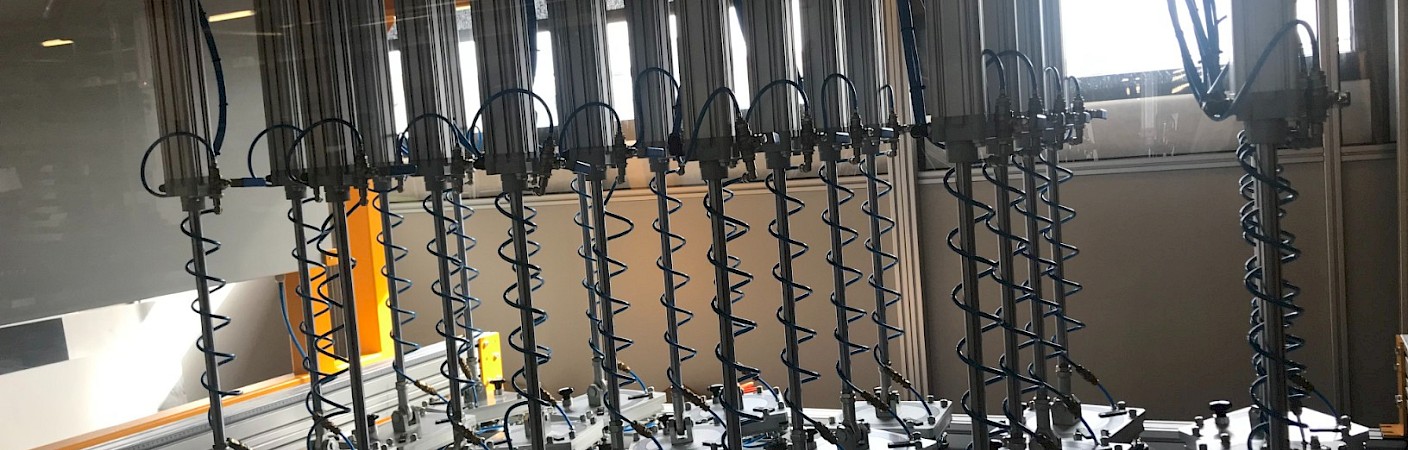
CEA Mechanical Test Bench at INES
Crédits : CEA
Photovoltaics: What Really Makes Your Panels Strong!
Published on 09/16/2026
Production volumes of photovoltaic panels are increasing rapidly, accompanied by a constant evolution in panel shapes: larger, thinner, and lighter. Furthermore, “glass-front and polymer-back sheet” architectures—which once dominated the market due to their cost and weight advantages—are increasingly being replaced by a glass-glass structure. This structure is inherently more robust in terms of mechanical strength, making the panels less susceptible to wind and snow loads, but remains fragile during handling or installation if no frame is present.
Mechanical reliability is therefore becoming essential in the design process, particularly for large-area panels intended for markets with harsh climatic conditions.
The aluminum frame plays a central mechanical role in reinforcing the panel, limiting deformation and redistributing stresses. Although it accounts for about 10% of the module’s cost and more than 12% of its carbon footprint, the frame is designed without a deep understanding of its mechanical contribution. It is, of course, well known that the frame height, the thickness of the aluminum, and the mounting configuration influence mechanical performance, but their respective impacts remain insufficiently quantified.
Researchers from 3SUN and CEA at INES are conducting studies to gain in-depth knowledge of the behavior of the components that contribute to mechanical performance and the impact of modifying them.
Their latest study aims to evaluate the impact of the position of the clamps and the frame design on panel deformation under various mechanical loads.
An extensive experimental database was compiled to study the behavior of large photovoltaic panels subjected to standardized mechanical loads. Objective: to quantify the extent to which module deformation depends on the frame geometry—particularly its height—and mounting conditions, including the number of clamps, their positioning, and the presence of support rails. The experimental result is supplemented by numerical modeling to identify the dominant physical mechanisms governing module deformation and stress distribution.
Among their findings, it is worth noting that increasing the frame height significantly improves resistance to negative loads, while the positioning of the clamps and the number of support rails can have an even greater impact on overall rigidity.
In several cases, it was found that the mounting configuration took precedence over the frame’s material properties. Numerical modeling confirms that an accurate representation of both the laminated assembly and the frame is essential for predicting stresses and deformations, and highlights that glass remains the most critical component in terms of mechanical failure.
Further development of our simulation tools is underway, providing us with the flexibility needed to analyze different dimensions and configurations. This adaptation will allow us to accurately model performance, optimize design parameters, and validate the scalability of a new format before moving on to the physical prototyping phase.
The results were presented at the EU-PVSEC conference in Rotterdam (September 14, 2026 – Poster session 3AV.2).
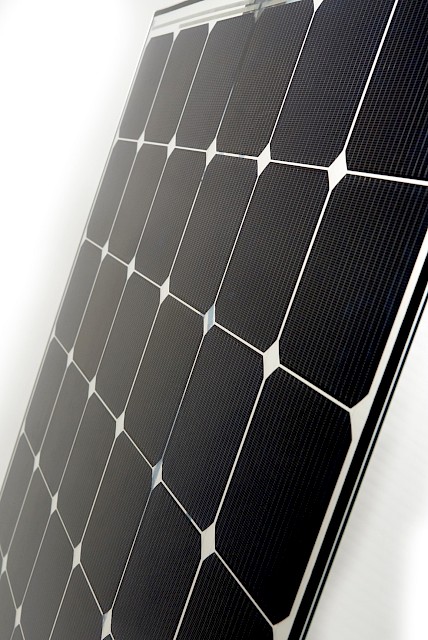 Credits: CEA
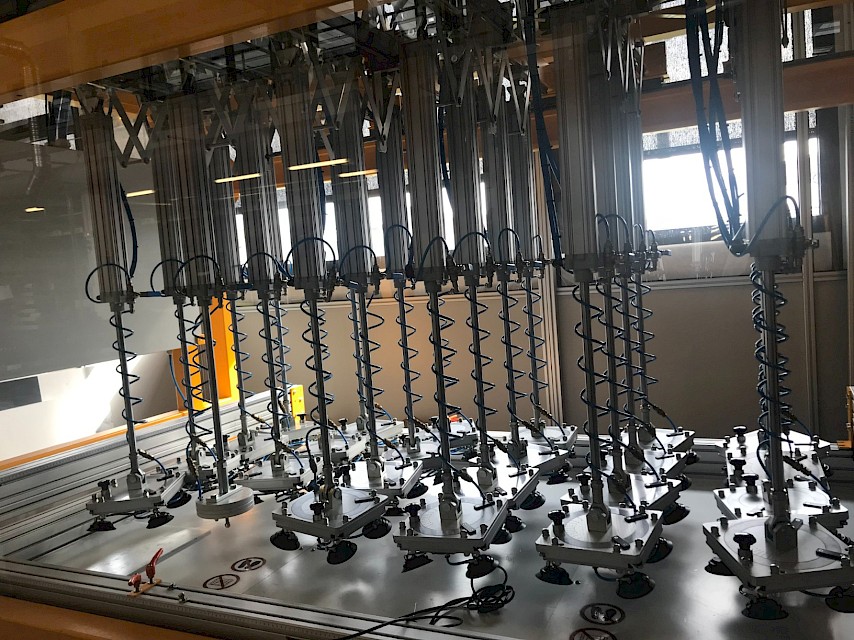 Credits: CEA INES